Understanding German Imports of Russian Natural Gas: A Step-by-Step Guide
Germany’s reliance on Russian natural gas has been a defining feature of its energy strategy for decades, shaping everything from industrial policy to household heating. While the landscape has shifted in recent years, the infrastructure and trade flows built around these imports remain a critical backdrop to Europe’s energy security. Here’s what you need to know about how German imports of Russian natural gas evolved, why they mattered, and what’s changed.
How did German imports of Russian natural gas begin?
The relationship traces back to the 1970s, when West Germany signed its first long-term supply contracts with the Soviet Union. These deals were driven by two key factors: West Germany’s need for a stable, long-term energy source to fuel its post-war industrial boom, and the Soviet Union’s desire to secure hard currency through energy exports. The most famous of these early agreements was the Yamal-Europe pipeline, which began transporting gas from Siberia to Germany via Poland in the 1990s. By the 2010s, Russia supplied roughly a third of Germany’s natural gas needs, cementing a dependency that would later spark geopolitical tensions.
What role did these imports play in Germany’s energy mix?
Russian gas wasn’t just a backup option—it was a cornerstone of Germany’s energy strategy. The country leaned heavily on it for three main reasons: reliability, price competitiveness, and the flexibility of pipeline infrastructure. Unlike liquefied natural gas (LNG), which requires expensive terminals, pipeline gas could be delivered directly to industrial hubs and urban centers. This made it ideal for powering factories, heating homes, and even supporting Germany’s transition to renewable energy by balancing intermittent wind and solar output. The Nord Stream pipelines, completed in 2011 and expanded in 2012, further entrenched this reliance by doubling import capacity from Russia.
Why did Germany’s reliance on Russian gas become controversial?
The partnership faced growing scrutiny over time, particularly after Russia’s annexation of Crimea in 2014. Critics argued that Germany’s energy dependence gave Moscow leverage over European policy, a concern that intensified during the 2022 invasion of Ukraine. The war exposed the risks of relying on a single supplier for a critical resource, prompting Germany to accelerate its plans to diversify energy sources. By mid-2022, the German government had officially declared an end to Russian gas imports, though the transition was—and remains—complex.
What replaced Russian gas in Germany’s energy mix?
Germany’s pivot has involved a multi-pronged approach. First, it ramped up imports of LNG from countries like the United States, Qatar, and Norway, building new terminals such as the one in Wilhelmshaven. Second, it doubled down on renewable energy, aiming to generate 80% of its electricity from wind, solar, and other sources by 2030. Third, it extended the lifespan of its remaining nuclear and coal plants as temporary bridges. The government also prioritized energy efficiency, offering subsidies for heat pumps and building insulation to reduce demand. While these steps have reduced reliance on Russian gas, the process has been costly and politically contentious.
What are the lasting implications of this shift?
The end of Russian gas imports marks a turning point for Germany’s energy policy, but the transition isn’t complete. The country now faces higher energy prices, which have strained household budgets and industrial competitiveness. Some industries, like chemicals and steel, have relocated production to countries with cheaper energy, raising concerns about deindustrialization. Meanwhile, Germany’s push for renewables has accelerated, but grid expansion and storage solutions lag behind, creating new challenges. On the geopolitical front, Germany’s reduced dependence on Russia has reshaped its foreign policy, aligning it more closely with Western allies but also leaving it vulnerable to energy price volatility from other suppliers.
What’s next for Germany’s energy strategy?
Germany’s energy future will likely hinge on three priorities: accelerating renewable energy deployment, securing alternative gas suppliers, and improving energy storage. The government has set ambitious targets, including 100% renewable electricity by 2035 and a phase-out of gas heating systems by 2045. However, the roadmap remains uncertain, with debates over nuclear power, hydrogen infrastructure, and the role of gas as a transitional fuel still unresolved. For now, Germany’s energy landscape is in flux, shaped by the lessons of its past reliance on Russian gas and the urgent need to build a more resilient system.

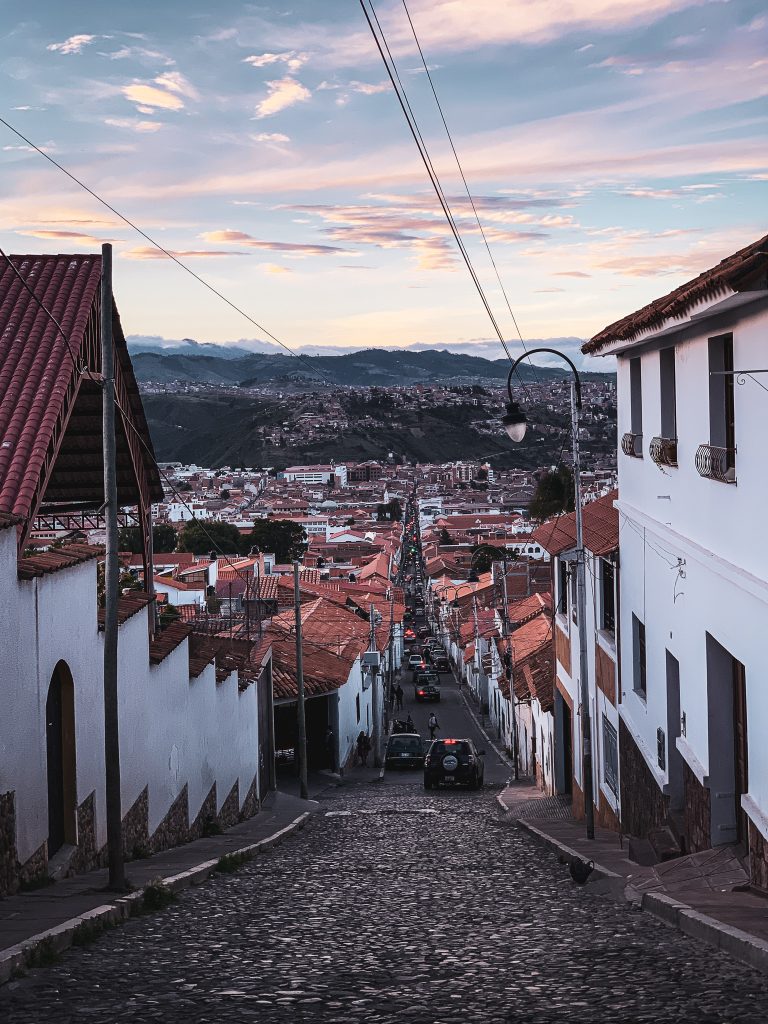
Sucre 🇧🇴: The Hidden Gem Of Bolivia (and Its EPIC Street Party!) - YouTube

Sucre 🇧🇴: The Hidden Gem of Bolivia (and its EPIC Street Party!) - YouTube
The Ultimate Guide To Nightlife In Sucre, Bolivia - The Partying Traveler

The Ultimate Guide to Nightlife in Sucre, Bolivia - The Partying Traveler
Historical Colonial Style Streets Of Sucre At Night Bolivia Stock Photo

Historical Colonial Style Streets Of Sucre At Night Bolivia Stock Photo ...